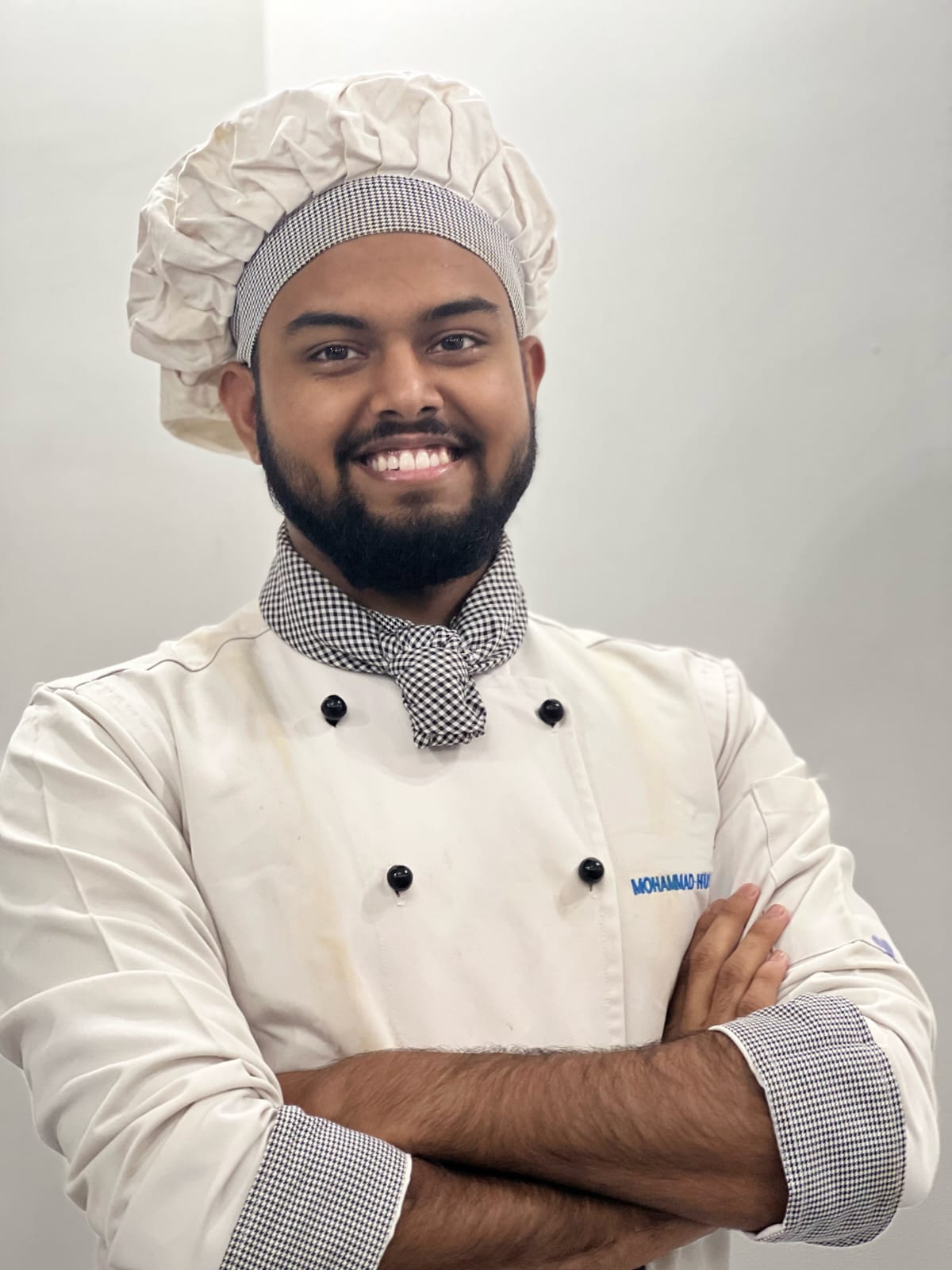
CHEF MOHAMMAD HUSAIN
CHEF · EDUCATOR · MENTOR
A three-hour, hands-on session taking students from identification and freshness checks to fabrication, yield and professional use across more than 30 marine and freshwater species.

Chef Mohammad Husain conducted a specialised Professional Seafood & Fish Fabrication Workshop at the Institute of Hotel Management, Bhopal, giving approximately 400–450 students an intensive, hands-on experience in the identification, preparation and professional fabrication of marine and freshwater seafood.
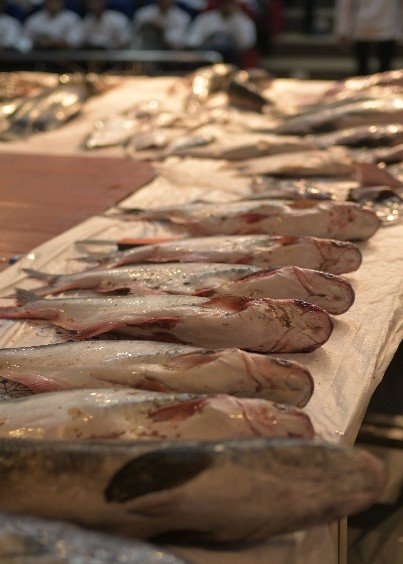
The three-hour session brought together an unusually diverse selection of marine fish, freshwater fish, crustaceans and cephalopods, letting students see first-hand how anatomy, handling, fabrication and yield differ across species.

Recognising species characteristics, physical structure, anatomy and commercial identity, and why accurate identification matters for purchasing, costing and menu planning.
Practical methods to judge seafood quality and make informed buying decisions for professional kitchens.
Fundamental and advanced techniques, turning whole fish into usable professional cuts.
Structural differences between species and the techniques needed to maximise usable meat.
Cleaning and preparation of less commonly encountered seafood, and the anatomy that shapes how it is fabricated.
Seafood treated as a commercial product, where every fabrication decision affects the bottom line and avoidable waste is minimised.


The selection was built to expose students to different anatomical structures, fabrication challenges and commercial applications, not just the commonly available species.
Across four seafood categories, all available for practical learning.


Students engaged closely with the seafood, observed anatomical structures, understood species-specific differences and took part in the fabrication process, developing an understanding of how professional seafood fabrication is actually performed.
Professional tools helped students connect tool selection, technique, safety and fabrication quality.
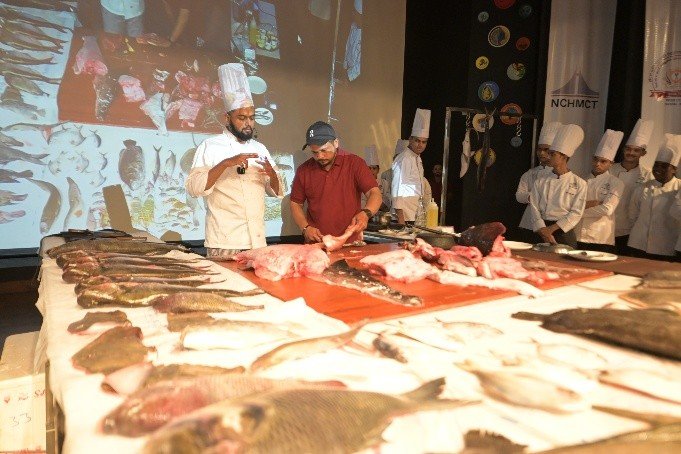
The workshop received an exceptionally strong response. Engagement stayed high throughout the demonstrations, with particular curiosity around species students rarely meet in conventional culinary training.
Its scale, species diversity and practical nature created an immersive learning environment and showed the value of experiential, industry-led education in culinary and hospitality programmes.
The response was even stronger than the previous Goat & Lamb Carcass Butchery Workshop, showing strong interest in specialised seafood knowledge.