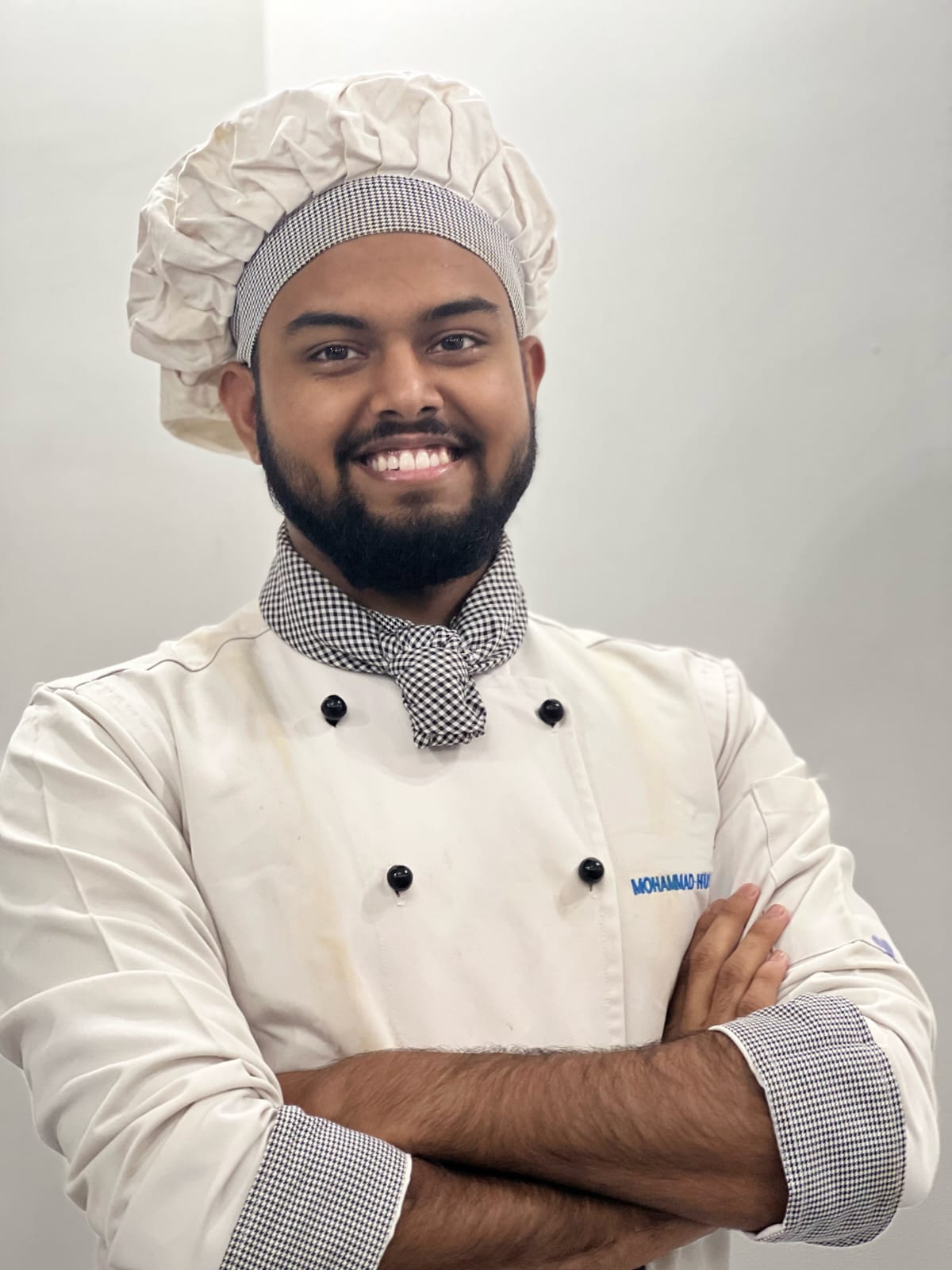
CHEF MOHAMMAD HUSAIN
CHEF · EDUCATOR · MENTOR
A two-hour, industry-led session that took students from identifying the animal to breaking down the carcass and getting the most usable meat from it.

Chef Mohammad Husain conducted a specialised Professional Goat & Lamb Carcass Butchery Workshop at the Institute of Hotel Management, Bhopal, designed to give students practical exposure to professional meat fabrication and carcass utilisation.
The two-hour session combined foundational theory with hands-on learning, so students understood the complete process: identifying the animal, approaching the carcass correctly, executing professional butchery techniques and maximising the usable meat obtained from it.
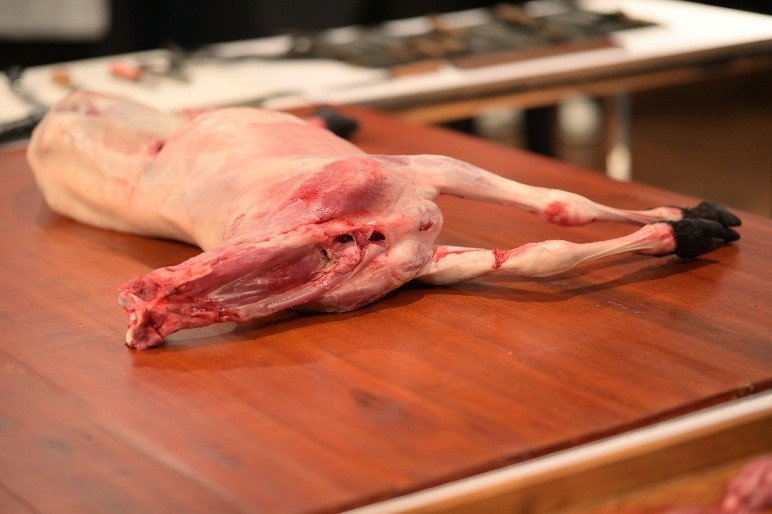
Identifying goat and lamb, understanding carcass structure and recognising what influences meat quality and use.
Breaking down goat and lamb carcasses into commercial and non-commercial cuts, with emphasis on correct cutting technique.
How professional butchery decisions influence the quantity and value of usable meat obtained from a carcass.
Creating greater value through fabrication, cut selection and use of every portion, not just conventional cuts.

Students were given the opportunity for hands-on learning and close practical observation, helping them understand the techniques and decisions involved in professional carcass fabrication.
A professional 12-piece butcher knife set was used to demonstrate the right tools and how each is applied in professional butchery.
One of the strongest aspects of the workshop was the enthusiasm and active participation of the students.
The session generated real curiosity around an area of culinary education students rarely experience in such a direct, practical format, reinforcing the value of experiential learning in building butchery knowledge and confidence.

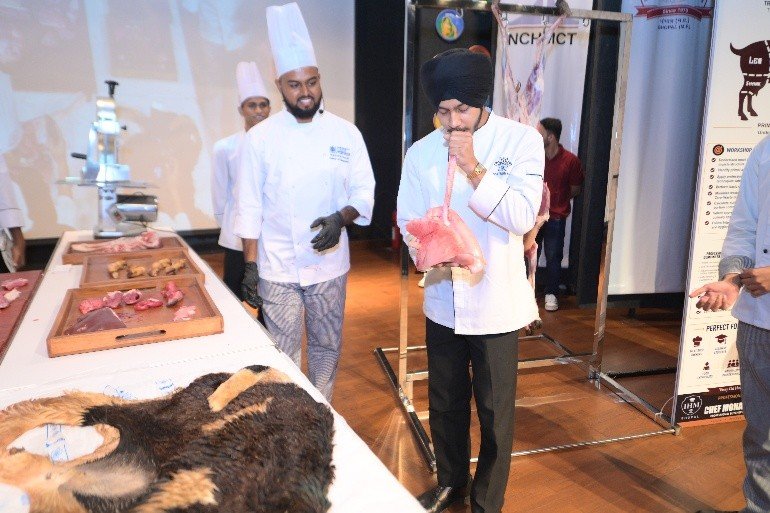
Rather than focusing solely on the names of cuts, the session helped students understand the complete relationship behind every cut.
The workshop showed how effective it is to combine industry expertise with practical culinary education.

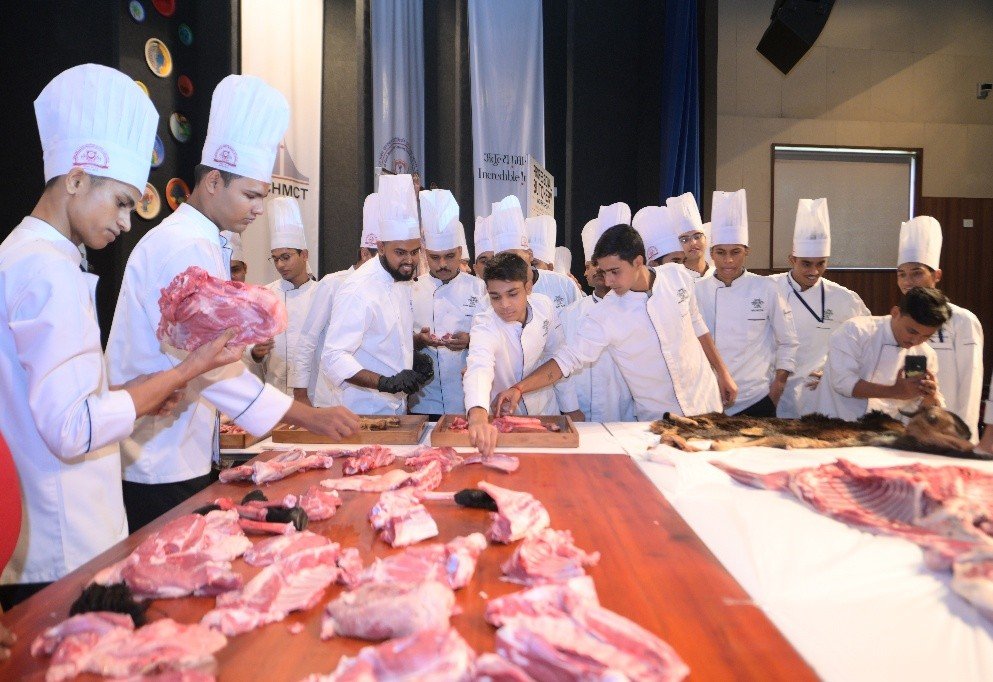


The high level of student participation and enthusiasm made this a particularly engaging learning experience.