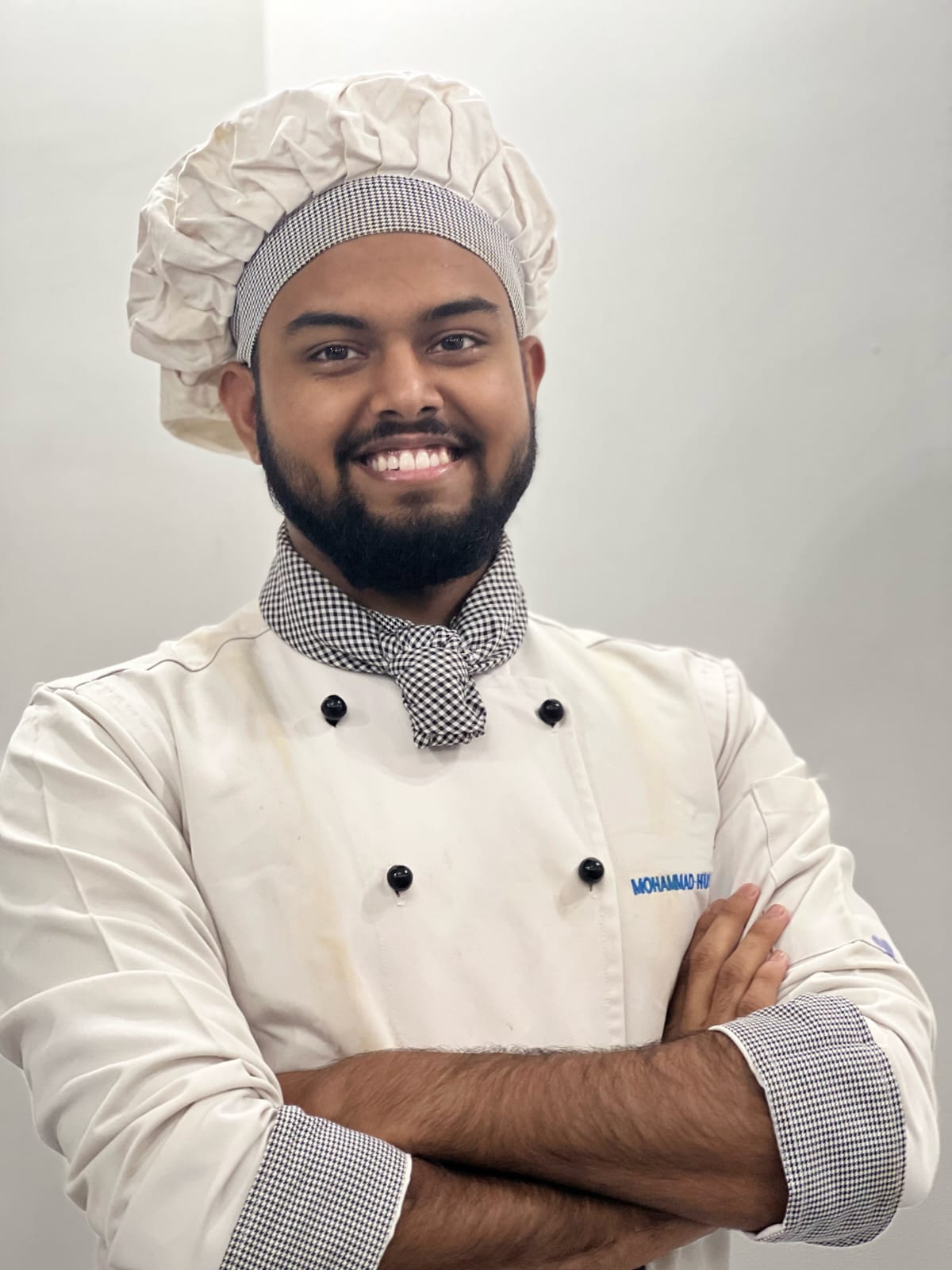
The Bulk Cooking & Large-Scale Food Production Workshop by Chef Mohammad Husain is a practical, industry-focused learning experience designed to introduce participants to the systems, techniques and commercial considerations involved in preparing food for large numbers of guests.
Cooking for 20 people is very different from cooking for 200, 500 or 1,000 guests. As the scale increases, ingredient ratios, preparation methods, equipment, manpower, timing, consistency, food safety, holding, transportation and costing become critical to the success of the operation.
This workshop takes participants beyond the concept of simply increasing a recipe. It demonstrates how professional chefs and food-production teams plan, prepare, cook, hold, portion and serve large quantities of food while maintaining consistency, quality and safety.
What Participants Learn
01. Understanding Bulk Cooking
The workshop begins by understanding what changes when food production moves from a small kitchen to a large-scale operation. Participants explore:
- What constitutes bulk cooking
- Differences between à la carte and bulk production
- Cooking for restaurants, banquets and events
- Institutional and industrial food production
- Catering operations
- Large weddings and social functions
- Hotel banquets
- College and university food production
- Corporate catering
- Community and mass-feeding operations
Participants learn that successful bulk cooking requires planning and systems—not simply bigger vessels and larger quantities of ingredients.
02. Menu Planning for Large Numbers
A successful bulk operation begins long before the cooking starts. Participants learn how to plan a menu based on:
- Number of guests
- Type of event & Guest profile
- Meal period & Service style
- Available equipment & Available manpower
- Production time & Budget
- Menu complexity & Holding requirements
The workshop demonstrates how chefs decide what should be cooked, how much should be produced and when each item should enter production.
03. Recipe Scaling
One of the most important aspects of bulk cooking is converting standard recipes into large-scale production quantities. Participants explore:
Topics include:
- Scaling recipes & Ingredient multiplication
- Yield calculations & Portion size calculations
- Standard recipes & Recipe cards
- Batch sizes
- Adjusting seasoning at scale
- Understanding that not every ingredient scales in exactly the same way
The objective is to help participants understand the logic behind recipe scaling, rather than simply multiplying every ingredient by the number of guests.
04. Quantity & Requirement Calculations
Before production begins, the kitchen must know exactly what is required. Participants learn how to calculate:
- Number of portions & Portion size
- Gross quantity & Net quantity
- Cleaning and trimming losses & Cooking losses
- Expected yield
- Required production quantity & Buffer quantity
- Ingredient requirements
For example:
This allows chefs to plan production while reducing both shortage and unnecessary food waste.
05. Mise en Place & Production Planning
Large-scale cooking requires highly organised preparation. Participants learn how to create a production plan covering:
- Ingredient preparation (Washing and cleaning, Cutting and portioning)
- Marination & Spice preparation
- Base gravies, Stocks and sauces
- Batch preparation
- Equipment allocation & Cooking sequence
- Holding requirements
The workshop introduces the concept of a production timeline, ensuring that every preparation reaches the service point at the correct time.
06. Large-Scale Cooking Techniques
Participants are introduced to techniques required when working with large quantities. Depending on the workshop format, demonstrations may include:
- Bulk boiling & Large-scale simmering
- Batch frying & Bulk roasting
- Large-scale braising
- Bulk gravy production
- Rice & Biryani production
- Dal, Curry, Sauce and stock production
- Large-batch vegetable preparation
The emphasis is on understanding how heat, moisture, cooking time and ingredient ratios behave differently at scale.
07. Bulk Indian Cooking
Indian cuisine presents unique challenges and opportunities in large-scale production. Participants can explore the production of dishes such as:
- Biryani & Pulao
- Dal, Curries & Gravies
- Vegetable preparations
- Rice dishes & Kebabs
- Tandoori preparations & Indian breads
- Desserts
The workshop focuses on maintaining flavour, texture, aroma and consistency across large batches.
08. Maintaining Consistency
Producing a large quantity of food is only half the challenge. The bigger challenge is ensuring that every single portion delivers the same experience.
Participants learn how professional kitchens maintain consistency through:
- Standard recipes & Accurate measurements
- Batch control & Cooking procedures
- Standardised seasoning & Quality checks
- Portion control & Defined cooking times
- Defined holding procedures & Chef supervision
This is particularly important in hotels, catering operations and institutional kitchens where hundreds of guests expect the same experience.
09. Equipment & Kitchen Capacity
Large-scale cooking requires appropriate equipment and infrastructure. Participants explore the role of equipment such as:
- Large cooking vessels & Stock pots
- Tilting pans, Bratt pans, Steam kettles
- Large rice boilers
- Commercial burners, Ovens & Combi ovens
- Fryers
- Bain-marie systems & Hot holding equipment
- Refrigeration and cold storage
The workshop also discusses matching production volume with equipment capacity, helping participants understand why kitchen planning is essential for efficient production.
10. Manpower & Kitchen Organisation
Bulk cooking is a team operation. Participants learn how chefs can organise manpower through:
- Work allocation & Station planning
- Production teams & Delegation
- Supervision & Communication
- Timelines & Task sequencing
- Quality control
The workshop demonstrates how a large production team can work as a coordinated system rather than as individuals performing disconnected tasks.